
How to Document Your Hiring Process So It Survives Staff Turnover
Rakesh · October 6, 2026 · 15 min read
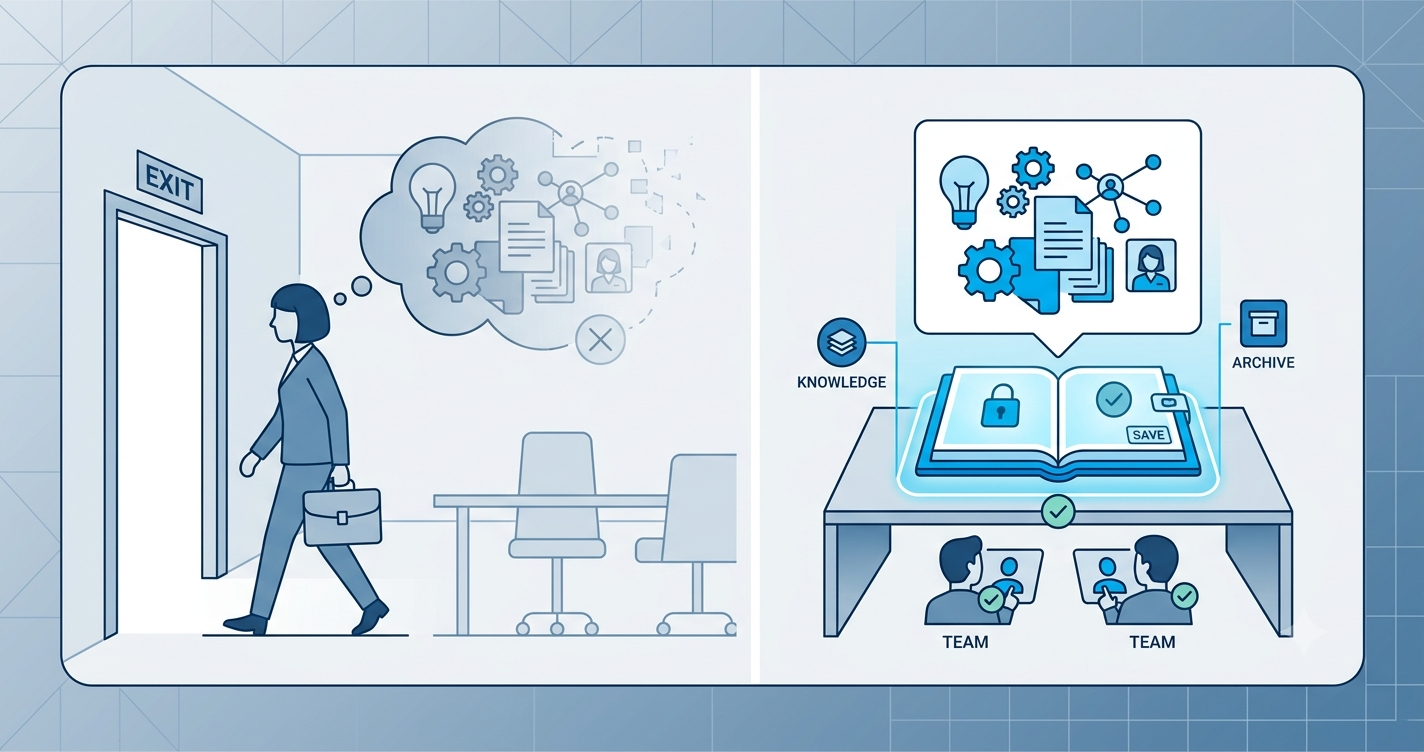
When a recruiter leaves, what typically walks out the door with them isn't just a person — it's an entire, undocumented mental map: which hiring managers actually mean what they say in an intake meeting, which sourcing channels quietly work best for which roles, what "we've tried that before and it didn't work" actually refers to, and dozens of smaller judgment calls nobody ever wrote down because the person making them was simply always there to make them. This is tribal knowledge, and in recruiting specifically, it tends to accumulate faster and get documented less than in almost any other business function — largely because the work feels relational and judgment-driven rather than procedural, even though much of it genuinely can, and should, be captured.
This article lays out why this matters more than most organizations realize, and a practical framework for documenting a hiring process so it survives the departure of whoever currently runs it.
Why This Is a Real, Underappreciated Risk
Most organizations do essentially nothing to capture departing knowledge. Research from APQC (the American Productivity & Quality Center, a long-established, respected research organization focused on process and knowledge management) found that only 8% of organizations consistently capture knowledge from departing employees, while a further 16% make no attempt at all — meaning the overwhelming majority fall somewhere in a weak middle ground of occasional exit interviews and ad hoc documentation requests, rather than anything systematic.
Concern about this risk is widespread, even where action hasn't followed. Industry research has found a large majority of manufacturers report genuine concern about the operational and productivity impact of losing undocumented knowledge — a pattern that plausibly extends to recruiting specifically, where institutional relationships (which hiring managers trust the process, which sourcing approaches have already been tried and abandoned) are just as easily lost when nobody wrote them down.
The damage tends to be gradual and easy to underestimate rather than a single dramatic event. Practitioner analysis of this problem consistently describes it as a slow accumulation of friction rather than a visible failure: new team members take longer to ramp up, the same basic questions get asked repeatedly, and institutional memory thins out a little more with each departure — individually small enough to shrug off, but compounding into a real, ongoing drag that rarely shows up as a single line item anyone notices and fixes directly.
A note on the murkier statistics in this space: you'll encounter some very large, precise-sounding dollar figures attached to this topic online (multi-trillion-dollar aggregate cost claims attributed to major consultancies). Several of these traced, on closer inspection, to unclear or unverifiable original sources rather than a specific, checkable report — so this article deliberately relies on the more directly sourced APQC finding above rather than repeating a dramatic-sounding number that couldn't be independently confirmed.
The reframe worth internalizing: If your hiring process would fall apart the day a specific recruiter left, that's not a sign you hired the wrong person — it's a sign the process itself was never actually documented, and instead lived entirely inside that person's judgment and memory. Fixing this isn't about distrust of your current team; it's about making the organization resilient to a transition that, statistically, will eventually happen.
Explicit vs. Tacit Knowledge: The Distinction That Matters Most
Effective documentation starts with recognizing that recruiting knowledge falls into two genuinely different categories.
Explicit knowledge is the kind that's relatively easy to write down: the specific steps in your intake process, the required interview stages for a given role type, the compliance requirements for a specific location, the tools and systems used at each stage. Most organizations that document anything at all document this category — because it's the easiest to capture, not necessarily because it's the most valuable.
Tacit knowledge is harder, and it's where most of the real risk sits: which hiring managers need extra hand-holding during calibration, which sourcing channels quietly underperform for certain role types despite looking fine on paper, how to read the specific signals that a given hiring manager is actually ready to make a decision versus still genuinely undecided, and the accumulated judgment about what "a strong candidate" concretely looks like for roles that resist a simple checklist definition. This is exactly the kind of knowledge that "lives in the heads of just a few experienced team members" and disappears the moment they do, unless it's deliberately captured.
The practical implication: a documentation effort that only captures explicit knowledge (a written SOP describing the steps) while leaving tacit knowledge uncaptured will still leave an organization vulnerable to a disruptive knowledge gap the moment a key person leaves — even with a technically complete process document in place.
A Practical Framework: Documenting a Hiring Process That Survives Turnover
Step 1 — Document the Explicit Process First, as a Living SOP
Write down the actual, current steps of your hiring process — intake, sourcing, screening, interview stages, feedback collection, offer approval — as a standard operating procedure that's genuinely kept current, not written once and forgotten. This is the foundation, even though it's not where the highest-risk knowledge sits.
Step 2 — Capture Intake Criteria and Calibration in Writing, Per Requisition
Building on the "three must-haves, two trade-offs, one deal-breaker" framework discussed elsewhere in this cluster, ensure every requisition has a written intake record — not just for reducing recruiter-hiring manager friction in the moment, but as a durable artifact that survives if the recruiter working that requisition changes partway through, or leaves before it closes.
Step 3 — Maintain a Decision Log for Non-Obvious Judgment Calls
For decisions that don't fit neatly into a checklist — why a particular sourcing channel was deprioritized for a specific role type, why a particular hiring manager's stated requirements need to be interpreted more flexibly than they sound — keep a simple, running log of the reasoning behind these calls. This is specifically where tacit knowledge lives, and it's the category most commonly left undocumented entirely.
Step 4 — Record, Don't Just Summarize, Calibration Conversations
Rather than relying on a recruiter's written summary of what makes a strong candidate for a given role, where possible, keep a record of actual example submissions that were rated strong versus weak, with the reasoning attached. This mirrors the calibration practice discussed in the FastHire piece on onboarding new recruiters — and serves double duty as both a training tool and an institutional-memory safeguard.
Step 5 — Map Relationships, Not Just Process Steps
Document which hiring managers prefer which communication style, which stakeholders need extra context before decisions, and which relationships took real time to build — this relational knowledge is exactly the kind that's hardest to reconstruct after someone leaves and easiest to overlook when documentation focuses only on procedural steps.
Step 6 — Build Documentation Into the Normal Workflow, Not a Separate Task
Following the general practitioner consensus on this problem, documentation that only happens reactively — during an exit interview, after someone has already resigned — captures far less than documentation built into the ongoing, everyday workflow. A decision log updated as decisions happen captures more, and more accurately, than one reconstructed from memory during a two-week notice period.
Step 7 — Assign Clear Ownership for Keeping Documentation Current
A one-time documentation project that isn't actively maintained will drift out of date as quickly as any other unmaintained resource. Assign specific ownership for keeping process documentation, intake records, and decision logs current on an ongoing basis, not just at the moment someone announces they're leaving.
A Practical Checklist: Building Turnover-Resilient Hiring Documentation
A current, actively maintained SOP documents the explicit steps of your hiring process
Every requisition has a written intake record capturing specific criteria and trade-offs
A running decision log captures the reasoning behind non-obvious judgment calls, not just outcomes
Real example candidate submissions, rated and annotated, exist as a calibration reference
Key hiring manager relationships and communication preferences are documented, not just process steps
Documentation happens continuously as part of normal workflow, not only during exits
A specific person owns keeping documentation current on an ongoing basis
Global Perspective: Knowledge Continuity Considerations by Region
🇦🇺 Australia
With vacancy fill rates declining to roughly 68.2% nationally (Jobs and Skills Australia, March 2026) and skills shortages concentrated in specific occupations, losing a recruiter's accumulated market knowledge for a genuinely thin, specialized talent segment is especially costly in the Australian market, since that specific expertise is harder to reconstruct than in a looser labor market.
🇺🇸 United States
Available research on institutional knowledge loss and capture rates (APQC's findings, manufacturing-sector concern data) is largely U.S.-anchored, though the underlying dynamic — tacit knowledge concentrated in a few people, rarely captured systematically — applies broadly.
🇬🇧 United Kingdom
CIPD data on hard-to-fill vacancies in specific sectors (healthcare, social care, education) suggests that documenting sector-specific sourcing and calibration knowledge is especially valuable for UK organizations hiring heavily into these persistently constrained fields.
🇪🇺 Europe (broad view)
Works-council involvement and formalized employment documentation requirements in several European markets mean process documentation often already exists in some compliance-driven form — extending it deliberately to cover tacit, judgment-based knowledge (not just compliance steps) captures the additional, currently uncaptured risk this article addresses.
🇮🇳 India
With 82% of Indian employers reporting difficulty filling roles (ManpowerGroup's 2026 Talent Shortage Survey), particularly for scarce AI-related technical skills, the accumulated sourcing knowledge a recruiter builds for these specific, hard-to-fill roles is disproportionately valuable — and disproportionately costly to lose undocumented, given how long it can take to rebuild that same market expertise from scratch.
What Most Articles Get Wrong
Most "process documentation" content treats this as purely an explicit-knowledge exercise — write down the steps, create a flowchart, done. This misses the harder, more valuable half of the problem: the tacit, relational, judgment-based knowledge that genuinely determines whether a hiring process works well, which rarely gets captured by a simple procedural SOP. An organization can have a beautifully documented step-by-step hiring process and still lose enormous, disruptive value the day an experienced recruiter leaves, if none of the actual judgment calls behind their decisions were ever recorded.
The second common gap: most guides treat documentation as something to do reactively, once someone has already resigned and a countdown to their last day has begun. Research and practitioner experience both point to continuous, workflow-embedded documentation as far more effective — not because exit-driven documentation is worthless, but because two weeks of rushed knowledge transfer captures a small fraction of what continuous documentation over months or years would have preserved.
Common Mistakes Companies Make
❌ Documenting only explicit process steps while leaving tacit, judgment-based knowledge entirely uncaptured
❌ Treating documentation as a one-time project rather than an ongoing, actively maintained practice
❌ Waiting until someone resigns to attempt knowledge capture, rather than documenting continuously
❌ Never assigning specific ownership for keeping documentation current
❌ Documenting process steps without documenting the relationships and communication preferences that make the process actually work
❌ Assuming a written intake record for one requisition is unnecessary since "the recruiter already knows the details"
Checklist: Would Your Hiring Process Survive a Key Departure Today?
Your current hiring process is documented as a living, regularly updated SOP
Every open requisition has a written intake record, not just a recruiter's memory of the conversation
Non-obvious judgment calls are captured in a running decision log, with reasoning attached
Real, annotated example candidate submissions exist for calibration purposes
Key hiring manager relationships and preferences are documented somewhere accessible beyond one person's memory
A specific person is responsible for keeping all of this current, not just for creating it once
Where Tools Fit — and Where They Don't
Given that the highest-risk knowledge in recruiting is tacit and judgment-based, this is a stage where the right tooling provides genuine, structural support: automatically capturing intake criteria and decision context as a normal part of the workflow rather than a separate documentation task, maintaining a searchable record of past requisitions, calibration examples, and hiring manager interactions that persists regardless of who's currently on the team, and surfacing this institutional record to a new or replacement recruiter automatically rather than requiring it to be manually reconstructed. This is exactly the layer FastHire's workflow and knowledge-capture tools are designed to support — building documentation into the everyday process rather than treating it as an afterthought only addressed during a departure.
What no tool can do on its own is decide which relationships and judgment calls are actually worth documenting, or have the deliberate conversations needed to surface tacit knowledge that a departing recruiter might not think to write down unprompted. Technology can make continuous documentation far easier and more consistent; the judgment about what matters most to capture still requires active, deliberate management attention.
Key Takeaways
Only 8% of organizations consistently capture knowledge from departing employees, per APQC research, with a further 16% making no attempt at all — most recruiting knowledge is at genuine, largely unaddressed risk of walking out the door.
Recruiting-specific knowledge splits into explicit (process steps, compliance requirements — relatively easy to document) and tacit (calibration judgment, relationship nuance, informal channel effectiveness — genuinely hard to capture, and where most of the real risk sits).
Damage from undocumented tribal knowledge tends to be gradual and easy to underestimate — a slow accumulation of friction rather than a single visible failure — which is exactly why it rarely gets addressed proactively.
A written intake record per requisition, a running decision log for judgment calls, and annotated calibration examples together address the tacit-knowledge gap that a simple procedural SOP alone leaves uncaptured.
Continuous, workflow-embedded documentation captures far more than reactive documentation attempted only after someone has already resigned.
Be skeptical of very large, precisely-stated dollar figures attached to this topic online — several trace to unclear or unverifiable sources; the more directly sourced APQC finding is a more defensible anchor for making the case internally.